Note: Medical disclaimer at the bottom of this page, jump to disclaimer.
How bunions change fit and pressure points
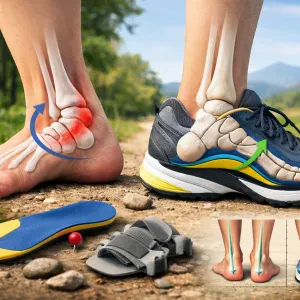
A bunion (hallux valgus) changes the shape of the forefoot. The big toe joint becomes more prominent on the inside of the foot, and the big toe often angles toward the other toes. That shift creates two very practical footwear problems: pressure on the joint itself, and reduced space where your toes want to sit naturally.
The result is that many shoes feel fine in length but painful across the forefoot, especially after a few hours. Tight or tapered toe boxes push the big toe joint inward, increase rubbing, and can make the bunion feel inflamed. Even a small amount of daily pressure adds up, which is why shoe choice matters so much.
Common signs your shoes are aggravating a bunion
- Redness or tenderness at the big toe joint after wearing certain shoes
- A burning or bruised feeling across the forefoot
- Numbness or tingling in the toes, especially later in the day
- Hot spots where the upper folds or seams sit over the joint
- Feeling like you need to loosen laces constantly as the day goes on
Bunion friendly shoes do not “fix” the bunion, but they can reduce daily irritation. The priority is to remove pressure, reduce rubbing, and keep the foot stable so you are not gripping with your toes for balance.
Toe box shape matters more than size
The most common mistake in bunion shopping is to size up for comfort. Sizing up can sometimes give you a little more width, but it often creates extra length, which leads to heel slip and toe gripping. The issue is usually not length, it is toe box shape and forefoot space.
What to look for in a bunion friendly toe box
- Rounder outline: Less taper toward the big toe joint, more natural foot shape.
- Enough width at the widest part: No pinching when you stand and shift weight.
- Toe wiggle room: Toes should move freely, not feel stacked or squeezed.
- Stable platform: A roomy toe box still needs a stable base so the foot feels secure.
How to test toe box space in a shop
Stand up, then gently press the upper near the bunion area. If the material is already tight against the joint, it is likely to rub after a few hours. Walk and pay attention to whether the big toe joint feels “pushed.” If you feel pressure during a short try on, it usually gets worse with time.
Toe box height matters too
Some bunions feel irritated not only by side pressure, but also by pressure over the top of the joint. A shoe with more forefoot volume, sometimes called depth, can feel calmer because it reduces that top down contact.
Materials that reduce rubbing
Bunion comfort is not just about shape, it is also about what touches the bunion. A shoe can be wide enough, but if it has a stiff overlay or a seam that sits directly on the joint, you may still get irritation. The best uppers for bunions tend to be smooth, forgiving, and flexible over the forefoot.
Upper materials that often work well
- Stretch knit: Can accommodate the bunion shape and reduce rubbing, good for sensitive areas.
- Soft mesh: Breathable and more forgiving than stiff synthetic overlays.
- Smooth leather: Can work well if it is flexible and not heavily reinforced over the bunion zone.
- Minimal seams: Fewer seams over pressure points usually means fewer hot spots.
Materials to be cautious with
- Stiff overlays that cross the big toe joint
- Hard toe caps or structured forefoot panels that do not flex
- Bulky internal seams that sit right on the bunion area
- Narrow pointed uppers, even if the shoe is “wide” elsewhere
Support still matters
Soft uppers feel great, but the shoe still needs a stable base. If the shoe is too flexible and the foot feels unstable, you may grip with the toes, which increases forefoot tension. Aim for the balance: forgiving upper, stable platform, secure heel hold.
Wide and extra-wide fit guidance
Wide fit is often essential for bunions, but “wide” is not a universal standard. Different brands shape their shoes differently, and some “wide” models still taper sharply at the toe. Treat width as one filter, not the final answer. You want the right length, then the right width, then the right shape.
Start with correct length
Measure both feet and match the larger foot. You want about a thumb width of space in front of the longest toe when standing. If you size up for width, you may create too much length and increase heel slip, which can worsen irritation.
Then choose the width you need
If your forefoot is being squeezed, move to wide or extra wide options, and prioritise toe box shape. A shoe can be wide at midfoot but still taper at the toes. Look for models that remain roomy at the front.
Depth and volume can be as important as width
Some bunions need more room over the top of the foot, not just side to side space. Depth style shoes can feel calmer because they reduce pressure at the joint and allow orthotics if you use them.
Try shoes later in the day
If you swell, you need a fit that stays comfortable at your worst case, not just at 9am. Trying shoes later makes it easier to choose a fit that stays stable without becoming tight.
Best picks for men
For men, bunion comfort usually comes from three things: roomy toe shape, wide fit availability, and a stable base that reduces toe gripping. Use these pick categories to guide readers to your listings and let them compare widths and sizes. If you want to view a product on Amazon, click the Continue button next to the price.
Men’s pick 1: Wide fit supportive walking shoes with a rounder toe box
Men’s pick 2: Soft upper trainers that reduce bunion rubbing
- Best for: irritation at the big toe joint, sensitive bunion area
- Brands to check: ASICS, Brooks, HOKA, Mizuno
Men’s pick 3: Stable cushioned shoes for long days on hard floors
Men’s pick 4: Professional clogs for firm support and roomy uppers
- Best for: standing roles where you want a firm base and a roomy forefoot
- Brands to check: Dansko
Men’s pick 5: Extra depth, wide and extra wide, orthotic friendly comfort
- Best for: significant bunions, swelling, orthotics, high volume feet
- Brands to check: Orthofeet
Shortcut: Bunions and wide fit shoes
Best picks for women
Women often need a balance of secure heel hold and roomy forefoot comfort. A shoe can be wide enough in the toe box but still slip at the heel if the fit is wrong. Prioritise correct length and secure heel hold, then choose the width and upper material that reduces pressure on the bunion area. If you want to view a product on Amazon, click the Continue button next to the price.
Women’s pick 1: Wide fit walking shoes with a roomy toe shape
Women’s pick 2: Soft upper trainers for reduced rubbing and hot spots
- Best for: irritation at the bunion area, sensitive skin
- Brands to check: ASICS, Brooks, HOKA, Mizuno
Women’s pick 3: Stable cushioning for hard floors and longer days
- Best for: bunions plus heel soreness, joint fatigue, standing roles
- Brands to check: HOKA, Brooks, ASICS
Women’s pick 4: Professional clogs with firm support and roomy uppers
- Best for: standing roles where you want a supportive base and easy on off
- Brands to check: Dansko
Women’s pick 5: Depth, wide and extra wide, orthotic friendly comfort
- Best for: significant bunions, swelling changes, orthotics, sensitive feet
- Brands to check: Orthofeet
Shortcut: Bunions and wide fit shoes
Socks and lacing to reduce irritation
Shoes do most of the work, but socks and lacing can be the difference between “tolerable” and “comfortable.” The goal is to reduce friction, reduce pressure on the bunion area, and keep the heel secure so you are not sliding forward into the toe box.
Sock tips that help bunions
- Smooth seams: Choose socks with minimal toe seams to reduce rubbing.
- Light cushioning: Can reduce pressure and friction inside the shoe.
- Moisture control: Helps reduce hot spots on long days.
- Avoid tight bands: Tight sock cuffs can worsen swelling and change comfort.
Lacing tricks for bunion comfort
If pressure sits over the bunion area, loosening the forefoot zone slightly while keeping the heel secure can help. In many cases, heel security is the real key, because it prevents the foot sliding forward and smashing the bunion into the upper.
Heel security matters
If your heel slips, try heel lock lacing. If the shoe still slips, you may need a different size, a different heel shape, or a shoe with a more secure collar design.
FAQs
Should I buy a bigger size for bunions?
Not automatically. Sizing up can add length and create heel slip, which often makes bunion discomfort worse. It is usually better to choose the right length, then select wide or extra wide, plus a roomier toe box shape.
Do wide shoes always fix bunion pain?
Wide helps, but shape matters. A wide shoe that still tapers sharply at the toe can still press on the big toe joint. Prioritise toe box shape and soft upper materials.
Are soft uppers enough, or do I need support too?
You need both. Soft uppers reduce rubbing, but a stable base reduces toe gripping and keeps your foot moving predictably. The best bunion shoes combine a forgiving upper with stable support.
Can insoles help bunions?
They can help if they improve stability and load distribution, but they can also make shoes tighter. If you add an insole, make sure you still have enough forefoot space and your heel remains secure.
How do I check if a toe box is roomy enough?
Stand and wiggle your toes. You should feel space, not pressure. Then press the upper over the bunion area. If it is already tight in the shop, it will likely rub later.
Related guides: arthritis, neuropathy, wide fit shoes
Bunions often overlap with other comfort needs like arthritis stiffness, sensitive feet, and wider fit requirements. These guides can help you choose faster based on your main trigger.
- Arthritis-friendly shoes and rocker support picks
- Neuropathy and sensitive feet comfort picks
- Wide fit shoes guide
- Bunions and wide fit shoes
Best next step: choose the pick category that matches your bunion needs (roomy toe shape, soft upper, extra wide and depth, or stable cushioning) and compare two to four options by forefoot comfort and heel security. If you want to view a product on Amazon, click the Continue button next to the price.
Medical disclaimer: This content is for general information only and is not medical advice, diagnosis, or treatment. Shoes may improve comfort but they cannot treat the underlying cause of foot pain. If your pain is persistent, severe, or worsening, consult a qualified medical professional (such as a GP, podiatrist, or physiotherapist).