Note: Medical disclaimer at the bottom of this page, jump to disclaimer.
Heel spurs vs heel pain, what matters for shoes
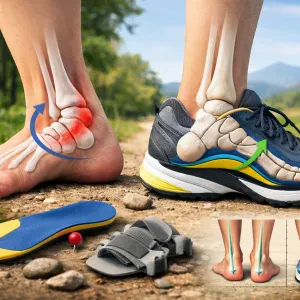
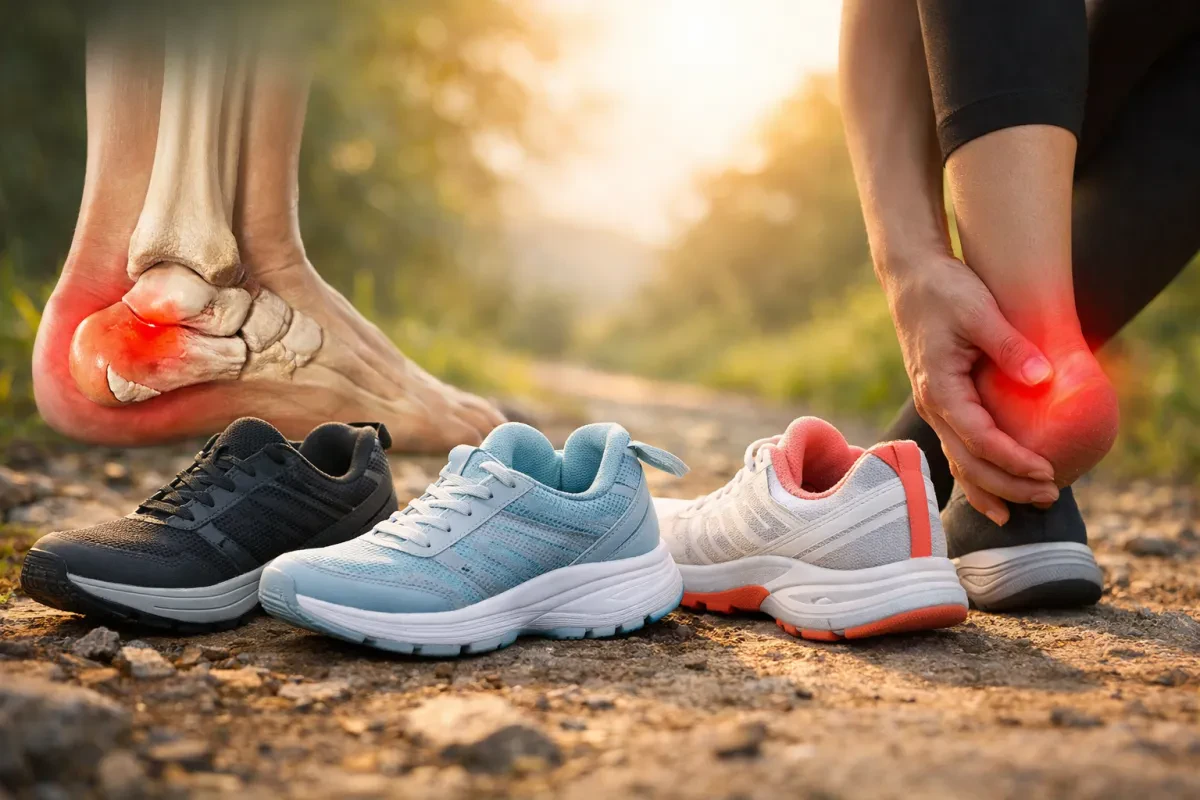
“Heel spur” is one of the most common phrases people use when their heel hurts, but a heel spur is not always the real reason you feel pain. A heel spur is a bony growth that can be seen on an X ray. Many people have heel spurs with no symptoms, while others have heel pain without a spur. What matters for footwear is not the label, it is how your heel reacts to load, impact, and pressure during each step.
Three common heel pain patterns
- Under heel tenderness: A bruised, sharp, or aching feeling under the heel, often worse on hard floors.
- Inside heel and arch pull: Pain that feels linked to the plantar fascia, often worse with first steps after rest.
- Back of heel irritation: Pain near the Achilles attachment or around the heel collar area, sometimes aggravated by stiff heel tabs.
What footwear should do for heel pain
Across most heel pain patterns, shoes should reduce impact, cradle and stabilise the heel, and prevent the foot from sliding around inside the shoe. Many people also benefit from a smoother heel to toe transition, because it reduces the time your heel spends taking the full load of the step.
If your pain is severe, sudden, associated with injury, or not improving, get medical advice. Footwear can improve comfort, but it is not a diagnosis or a cure.
Cushioning that reduces impact
When heel pain is driven by impact, cushioning is your first comfort tool. But not all cushioning is equal. A shoe can feel soft in the shop yet still feel harsh after an hour, especially if the cushioning compresses quickly or if the platform is unstable and forces your foot to work harder.
What “good” heel cushioning feels like
- Softens the thud: Heel strike feels less sharp on pavement, tile, or concrete.
- Stays steady: You do not feel like you are sinking to one side.
- Feels consistent: Comfort does not disappear after ten minutes.
Moderate vs max cushioning
Moderate cushioning suits many people because it balances comfort and stability. Max cushioning can be excellent for very sensitive heels or long days on hard floors, but only if the shoe has a stable base and a secure heel. If max cushion makes you wobble, choose a slightly firmer midsole or a wider platform.
A simple shop test for cushioning
When you try shoes, walk slowly first, then at your normal pace. If you feel stable at a slow pace but unsteady when you speed up, the cushioning may be too soft for your mechanics. If you feel a sharp “tap” under the heel on hard floor, you likely need more heel protection or a deeper heel cup.
Heel stability and heel counter support
Cushioning reduces impact, but stability reduces irritation. If your heel is sliding, wobbling, or collapsing inward, your tissues work harder to control motion. That extra work can keep heel pain active. Heel stability is one of the most underrated features for comfort.
What is a heel counter?
The heel counter is the supportive structure around the back of the shoe. A better heel counter does not mean it must be painfully stiff. It means the heel area holds shape and supports the rearfoot rather than collapsing. This can improve heel alignment and reduce friction.
Why heel stability helps heel pain
- Less sliding: Reduces rubbing and the “bruised” feeling from repeated movement inside the shoe.
- More predictable steps: Reduces stress through the plantar fascia and heel tissues.
- Better load sharing: Keeps impact more evenly distributed.
Fit matters as much as structure
You can buy a supportive shoe and still have heel slip if the fit is wrong. Aim for secure heel hold, then tune comfort with socks and lacing.
Rocker soles for heel offload
Rocker soles are a strong option for heel pain because they can make the step feel smoother and reduce the time your heel stays heavily loaded. Instead of bending sharply at the forefoot, the shoe helps roll you forward. This can be especially helpful if you have heel tenderness plus joint stiffness, or if your heel pain flares after long walks.
Who rocker soles tend to help most
- Heel pain that feels worse with long walks or hard surfaces
- Heel pain plus arthritis stiffness or joint pain
- Forefoot sensitivity alongside heel discomfort
When to be cautious
- If you have balance concerns or feel unstable on curved soles
- If you regularly walk on uneven ground and prefer a flatter platform
- If the rocker is very aggressive and feels like it tips you forward
How to try rocker shoes safely
Start indoors on flat floors. Wear them for short periods over a few days, then increase. Many people adapt quickly, but your calves and Achilles may notice a change, so gradual transition is smart.
Best picks for men
Because heel pain is often about impact plus stability, the best men’s picks are categories that combine cushioning, a secure heel, and a stable platform. Use these pick groups to guide readers to your product listings and let them compare widths, sizes, and current prices. If you want to view a product on Amazon, click the Continue button next to the price.
Men’s pick 1: Stable cushioned walking shoes for everyday heel comfort
Men’s pick 2: Max cushioning with a stable base for hard floors
Men’s pick 3: Rocker sole comfort shoes for smoother transitions
- Best for: long walks, heel tenderness plus stiffness, smoother stride
- Brands to check: HOKA rocker styles, selected walking models
Men’s pick 4: Stability shoes for inward rolling and tired arches
- Best for: heel pain with overpronation, mixed surfaces
- Brands to check: Brooks stability lines, ASICS stability lines, Mizuno stability lines
Men’s pick 5: Depth, wide fit, orthotic friendly options
- Best for: wide feet, orthotics, volume needs, sensitive feet
- Brands to check: Orthofeet
Shortcut to your current product listings: Heel pain and heel relief picks
Best picks for women
Women’s heel pain comfort often comes down to stable cushioning plus secure heel hold. Many women find a shoe feels good in the shop but slips at the heel later. Prioritise a supportive heel counter, correct length, and the right width, then choose the cushioning level that feels best for your daily routine. If you want to view a product on Amazon, click the Continue button next to the price.
Women’s pick 1: Supportive walking shoes with stable cushioning
Women’s pick 2: Higher cushioning for sensitive heels and hard floors
Women’s pick 3: Rocker sole options for smoother steps
- Best for: long walks, stiffness, smoother stride
- Brands to check: HOKA rocker styles, selected walking models
Women’s pick 4: Stability support for overpronation and arch fatigue
- Best for: heel pain plus flat feet, longer walks
- Brands to check: Brooks stability lines, ASICS stability lines, Mizuno stability lines
Women’s pick 5: Depth and wide fit comfort for sensitive feet and orthotics
- Best for: swelling changes, wide fit needs, orthotics
- Brands to check: Orthofeet
Shortcut to your current product listings: Heel pain and heel relief picks
When insoles help
Insoles can be useful for heel pain, but only when they match your foot and your shoe. The goal is to reduce pressure, improve load distribution, and stabilise motion. Insoles are not magic, but they can be a strong upgrade if your shoe is already a good base.
When insoles often help most
- If you feel a sharp pressure point under the heel
- If your heel feels better with gentle arch contact
- If you need extra stability and your shoe feels slightly too flexible
- If you want to fine tune fit, for example reducing internal volume slightly
When insoles can make things worse
- If the insole is too aggressive and creates a new pressure point
- If the shoe becomes too tight and causes rubbing or numbness
- If the insole tilts the foot and increases instability
Practical insole tips
- Choose a shoe with a removable insole so your replacement sits flat.
- Make sure your heel is still secure. Insoles can sometimes increase heel lift if the shoe is too shallow.
- Try changes gradually. Even small support changes can feel different at first.
FAQs
Can a heel spur cause pain even if the spur is not the problem?
A heel spur can be present without symptoms. Heel pain often relates more to irritated soft tissue and repeated loading. Footwear choices still matter because they change impact and pressure patterns.
Is softer always better for heel pain?
Not always. Softer can reduce impact, but if the shoe becomes unstable, your foot works harder and pain can persist. Stable cushioning is usually the best target.
Should I choose a rocker sole shoe for heel pain?
Many people benefit from a mild rocker because it smooths the step. Start with a mild rocker and prioritise stability. If you feel unsteady, choose a more traditional walking shoe with a smooth transition.
Are clogs good for heel pain?
They can be, especially for standing, because they often have a firm supportive platform. The trade off is security. If you need fast turns, longer walking, or maximum heel lock, lace ups or secure strap options are usually better.
How do I know if my shoes are worn out?
If the midsole feels dead, the sole looks uneven, or your heel feels more impact than it used to, the shoe may no longer be supporting you properly. Many people notice heel pain returns when cushioning compresses.
Related guides: plantar fasciitis, standing all day
Heel pain often overlaps with plantar fascia irritation and long hours on hard floors. These guides can help you narrow your next steps and choose shoes that match your main trigger.
- Plantar fasciitis and heel pain relief picks
- Work shoes for standing all day
- Flat feet and overpronation support picks
- Walking shoes for joint pain
Best next step: choose one category that matches your trigger (impact, instability, long hard-floor days, or stiffness) and compare two to four shoes by fit, heel hold, and how stable the cushioning feels while walking at your normal pace. If you want to view a product on Amazon, click the Continue button next to the price.
Medical disclaimer: This content is for general information only and is not medical advice, diagnosis, or treatment. Shoes may improve comfort but they cannot treat the underlying cause of foot pain. If your pain is persistent, severe, or worsening, consult a qualified medical professional (such as a GP, podiatrist, or physiotherapist).