Note: Medical disclaimer at the bottom of this page, jump to disclaimer.
Slip-ons that are supportive vs sloppy
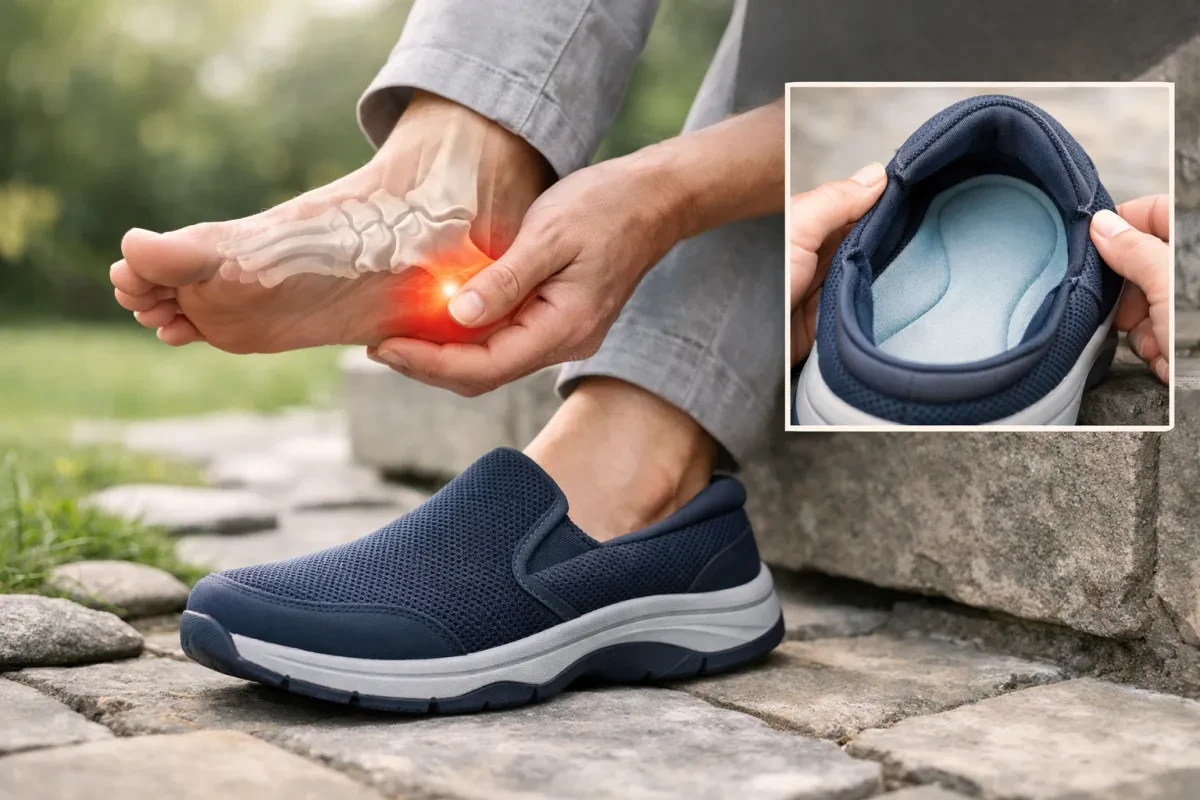
The biggest mistake with slip-ons is assuming they are all “easy and comfy.” Some slip-ons are supportive and structured, and some are basically soft uppers on floppy soles. The sloppy ones can feel fine for five minutes, then your foot slides, your heel slips, and you start gripping with your toes to stay stable. That extra movement increases friction and often makes pain worse.
Supportive slip-ons usually have
- Secure heel hold: Heel stays in place when you walk.
- Stable base: Wider platform that feels planted, not wobbly.
- Supportive upper: Holds the midfoot gently so it does not slide.
- Comfortable cushioning: Enough shock absorption without collapsing.
- Roomy toe box: Less toe crowding and less toe gripping.
Sloppy slip-ons often have
- Heel slip, especially when you speed up
- Thin, flexible soles that fatigue your feet
- Loose uppers that allow sliding and rubbing
- Toe crowding from tapered shapes
If you want easy entry, that is fine. But the priority is still the same: secure heel, stable base, and calm comfort inside the shoe.
Heel hold and stability, what to check
The simplest test for a slip-on is heel hold. If your heel lifts, your foot will slide, and sliding creates friction, toe gripping, and instability. A good slip-on should feel secure at the heel from the start, without you needing to clench your toes.
Quick heel hold test
- Put the slip-on on and stand up.
- Walk 20 to 30 steps at normal pace.
- Speed up slightly and do a gentle turn.
- If your heel lifts or the shoe slides, the fit is not secure enough.
Stability checks that matter
- Wide base: More ground contact usually feels steadier.
- Supportive heel counter: Helps the heel stay centred.
- Not overly flexible: Too much bending can increase fatigue.
- Secure upper: Midfoot should feel held, not loose.
If a slip-on fails the heel hold test, it is rarely fixed with time. Choose a different shape, a different size, or a more structured slip-on design.
Best slip-ons for heel pain
Heel pain needs stable cushioning and supportive heel structure. In slip-ons, heel pain comfort improves when the heel stays secure and the sole does not feel flimsy. Avoid flat, flexible slip-ons that increase heel impact and make the arch work harder. If you want to view a product on Amazon, click the Continue button next to the price.
Best slip-on categories for heel pain
- Supportive slip-on walking shoes with stable cushioning: Best everyday choice for many people.
- Higher cushioning slip-ons with stable base: Helpful for hard floors and sensitive heels.
- Stability slip-ons if you overpronate: Helps if inward roll aggravates heel pain.
- Orthotic-friendly slip-ons: Useful if you use inserts, choose a removable insole shoe.
Start here: Plantar fasciitis and heel pain relief picks
Best slip-ons for bunions and wide fit
For bunions and wide feet, the toe box shape matters more than the label. A slip-on can be wide but still taper at the toes. Look for rounder toe shapes, wide options, and soft uppers that do not rub the big toe joint. Heel hold still matters, so avoid sizing up in length. If you want to view a product on Amazon, click the Continue button next to the price.
Best slip-on categories for bunions and wide fit
- Wide fit supportive slip-ons with roomy toe shape: Best for daily comfort.
- Soft upper slip-ons: Helpful if rubbing is the main trigger.
- Depth slip-ons for swelling or orthotics: Best if volume is the issue, not just width.
- Stable base slip-ons: Reduces toe gripping and forefoot fatigue.
Start here: Bunions and wide fit shoes
Best slip-ons for neuropathy
Neuropathy and sensitive feet usually need smoother interiors, reduced seams, pressure relief cushioning, and stable soles. In slip-ons, you also need secure heel hold, because sliding increases friction. Depth and wide fit options can be helpful if compression triggers discomfort. If you want to view a product on Amazon, click the Continue button next to the price.
Best slip-on categories for neuropathy comfort
- Depth and seam-reduced supportive slip-ons: Strong all-round option for sensitive feet.
- Stable cushioned slip-on walking shoes: Good for daily walking and confidence.
- Higher cushioning slip-ons with stable base: Helpful on hard floors if the platform stays steady.
- Easy-entry supportive options with secure heel: Useful if bending is difficult, but fit must be stable.
Start here: Neuropathy shoes and sensitive feet comfort picks
Best slip-ons for arthritis
Arthritis friendly slip-ons should reduce impact, create smoother steps, and make entry easy without requiring finger strength. A mild rocker or smooth transition can reduce toe joint bending. Wide and depth options help on swelling days. If you want to view a product on Amazon, click the Continue button next to the price.
Best slip-on categories for arthritis comfort
- Supportive slip-ons with smooth transitions or mild rocker: Helpful for stiff toe joints.
- Stable cushioned slip-ons: Strong everyday option for joint comfort.
- Higher cushioning with stable base: Helpful for hard floors and longer days.
- Wide and depth slip-ons: Helpful for swelling days and inserts.
Start here: Arthritis-friendly shoes and rocker support picks
Fit hacks: socks, insoles, heel grips
Slip-ons live or die by fit. If a shoe is close but not perfect, small adjustments can improve comfort. Use fit hacks carefully. The goal is secure heel hold without squeezing the forefoot.
Sock hacks
- Thin socks: Useful if the slip-on feels tight.
- Light cushioning socks: Can reduce pressure points and improve comfort.
- Smooth seam socks: Best for sensitive feet and neuropathy.
Insole hacks
- Use insoles if you need extra arch support or a more secure feel.
- Choose shoes with removable insoles so fit stays comfortable.
- Re-check toe space after adding insoles, inserts can move the foot forward.
Heel grip hacks
- Heel grips can reduce heel slip if the shoe is only slightly loose.
- If heel slip is large, grips will not fix it. Choose a different size or shape.
- Check that grips do not create rubbing at the heel collar.
FAQs
Are slip-ons bad for foot pain?
Not if they are supportive. A good slip-on has secure heel hold, a stable base, and supportive cushioning. A sloppy slip-on often increases sliding and friction, which can worsen pain.
How do I stop my heel slipping in slip-ons?
First, check size and shape. If heel slip is minor, heel grips and slightly thicker socks can help. If heel slip is noticeable, choose a different model with a more secure heel collar or a different size.
Can slip-ons work for plantar fasciitis?
Yes, if they have stable cushioning, supportive heel structure, and good heel hold. Avoid flat, flexible slip-ons that increase heel impact.
Are slip-ons good for bunions?
They can be if they have a roomy toe box and soft uppers. Toe box shape matters more than the slip-on label.
Can I use orthotics in slip-ons?
Yes, choose slip-ons with removable insoles and enough depth. After adding orthotics, re-check heel hold and toe space to make sure the fit stays stable.
Related guides: standing all day, arthritis
If you want slip-ons for work shifts or arthritis comfort, these guides can help you narrow down the best categories faster.
- Work shoes for standing all day
- Arthritis-friendly shoes and rocker support picks
- Neuropathy shoes and sensitive feet comfort picks
Best next step: start with your main pain trigger, then choose a supportive slip-on category that matches it. Compare two to four options by heel hold, toe room, and how stable the shoe feels on tired legs. If you want to view a product on Amazon, click the Continue button next to the price.
Medical disclaimer: This content is for general information only and is not medical advice, diagnosis, or treatment. Shoes may improve comfort but they cannot treat the underlying cause of foot pain. If your pain is persistent, severe, or worsening, consult a qualified medical professional (such as a GP, podiatrist, or physiotherapist).