Note: Medical disclaimer at the bottom of this page, jump to disclaimer.
What rocker soles are (simple explanation)
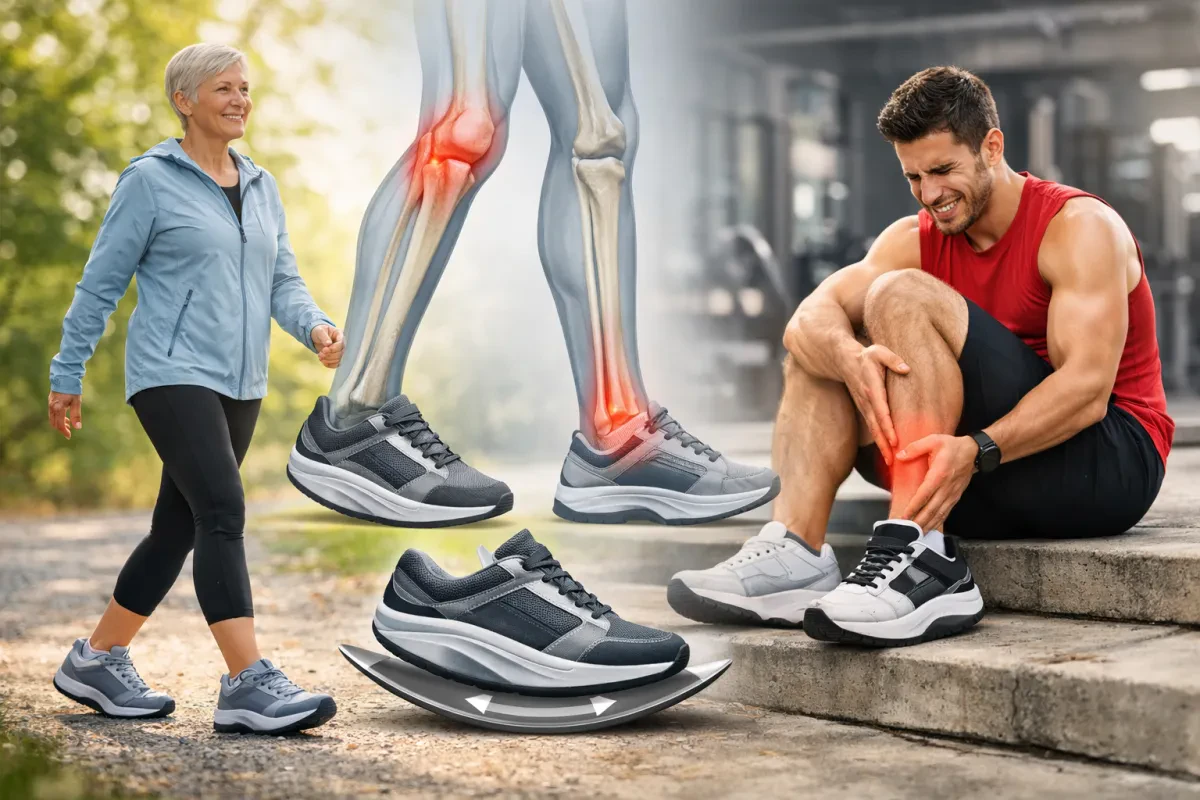
A rocker sole is a curved sole shape that helps you roll forward as you walk. Instead of your foot bending sharply at the forefoot, the shoe’s shape assists the transition from heel strike to toe-off. In plain terms, rocker soles can reduce the amount of bending your foot has to do during a step.
Some rocker shoes are only mildly curved. Others are very curved and feel like they “tip you forward.” The strength of the rocker affects who will like the shoe and how stable it feels.
Rocker sole vs flexible sole
Flexible soles bend more at the forefoot. Rocker soles roll forward with less bending. Neither is automatically better. Rocker is often helpful when bending is painful or when you want a smoother stride feel.
Who benefits most (heel pain, arthritis, joint pain)
Rocker soles tend to help when your discomfort is triggered by repeated bending or abrupt loading. The most common wins are smoother steps, less toe joint bending, and less “slap” on hard floors. Many people describe rocker shoes as making walking feel easier, especially when joints feel stiff.
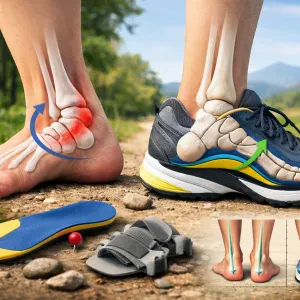
Heel pain and plantar fascia irritation
Rocker soles can reduce the harshness of the transition through the step, which can feel helpful for heel pain. Many rocker shoes also include cushioning, which reduces impact. The key is stability. A rocker shoe should feel planted, not wobbly.
Arthritis and stiff toe joints
This is where rocker soles often shine. If the big toe joint or midfoot is stiff and painful, rocker soles can reduce bending stress. That can make longer walks feel more manageable.
Joint pain in knees, hips, and ankles
Rocker soles can reduce abrupt loading and support smoother motion, which can help joints up the chain feel less stressed. Many people with knee or hip discomfort like the smoother roll-through, as long as the shoe feels stable.
Who benefits most in one line
If bending hurts or your stride feels jerky, rocker support is often worth trying.
When rocker soles can be a bad idea
Rocker soles are not a universal solution. The main downside is that some rockers can feel unstable, especially if the shoe is tall, very soft, or strongly curved. If you have balance issues or you frequently walk on uneven ground, an aggressive rocker can feel risky.
Situations where rocker shoes may not be ideal
- Balance concerns: If you feel unsteady in soft shoes, choose mild rocker or skip.
- Very uneven terrain: Trails, rocky ground, or jobs with lots of ladders and steps.
- Need for ground feel: If you prefer a lower, more flexible shoe for control.
- Specific ankle instability: Some people prefer a flatter, wider platform.
Signs the rocker is too strong for you
- You feel like you are tipping forward
- You feel unstable when turning
- Your calves or shins fatigue unusually quickly
- You avoid walking normally because you do not trust the step
These issues usually mean you need a milder rocker, a wider base, or a more stable cushioning setup, not necessarily that all rocker shoes are wrong for you.
How to choose rocker strength
Rocker strength is a combination of curve, stiffness, and how the shoe is built. You do not need a dramatic curve to get benefits. For most people, a mild to moderate rocker is easier to wear daily and still provides smoother transitions.
Mild rocker
- Best for: first-time rocker users, balance concerns, daily errands
- Feel: smoother step without feeling like a “rolling shoe”
Moderate rocker
- Best for: stiffness relief, longer walks, noticeable joint comfort gains
- Feel: more roll-through, still manageable for many people
Aggressive rocker
- Best for: people who already know they like strong roll-through
- Feel: can feel fast and efficient, but can reduce stability
Simple buying tip
If you are unsure, start mild. A stable mild rocker often beats a wobbly aggressive rocker for real-world comfort.
Best rocker shoes for men
These men’s pick categories focus on rocker benefits with stability, because stability is what makes rocker shoes feel safe and comfortable. Use these groups to guide readers to your listings and let them compare widths, sizing, and current pricing. If you want to view a product on Amazon, click the Continue button next to the price.
Men’s pick 1: Rocker walking shoes for toe stiffness and arthritis comfort
- Best for: big toe joint pain, midfoot stiffness, smoother stride
- Brands to check: HOKA rocker-style options, other rocker-focused walking designs
Men’s pick 2: Rocker plus cushioning for heel pain sensitivity
- Best for: heel pain, hard floors, impact sensitivity
- Look for: stable base, supportive heel counter
Men’s pick 3: Rocker and stability support for joint pain plus overpronation
- Best for: joint pain with inward roll, tired arches, longer walks
- Brands to check: stability-oriented ranges that include smooth transitions
Men’s pick 4: Wide fit and depth rocker options
- Best for: swelling days, wide feet, orthotics, sensitive toes
- Brands to check: Orthofeet depth options, wide rocker designs where available
Best rocker shoes for women
Women often need secure heel hold plus toe room, especially in rocker shoes where sliding can feel worse. Choose a stable base first, then choose rocker strength that feels smooth, not tippy. If you want to view a product on Amazon, click the Continue button next to the price.
Women’s pick 1: Rocker shoes for toe stiffness and smoother steps
- Best for: arthritis overlap, big toe joint discomfort, smoother stride
- Brands to check: HOKA rocker styles, other rocker-based walking designs
Women’s pick 2: Rocker plus cushioning for heel and joint sensitivity
- Best for: hard floors, heel pain, longer walks
- Look for: stable base, secure heel collar
Women’s pick 3: Rocker and stability support for overpronation overlap
- Best for: flat feet overlap, knee discomfort linked to inward roll
- Brands to check: stability shoes with smoother transitions
Women’s pick 4: Wide fit and depth rocker options for swelling days
- Best for: swelling days, bunion pressure, orthotics
- Brands to check: Orthofeet depth options, wide rocker designs where available
Getting used to rocker shoes safely
Even if rocker shoes feel great, you should ease into them. Your calves, shins, and feet may work differently because the shoe changes how you roll forward. A gradual break-in reduces soreness and helps you decide if the rocker strength is right.
A simple break-in plan
- Days 1 to 3: 15 to 30 minutes indoors or on a short flat walk.
- Days 4 to 7: 30 to 60 minutes, continue on mostly flat surfaces.
- Week 2: Use for longer walks if everything feels stable and comfortable.
Safety tips
- Start on flat ground, avoid uneven terrain at first.
- Focus on a steady pace rather than quick turns.
- If you feel unstable, try a milder rocker or a wider base.
- If pain increases, stop and reassess fit, rocker strength, and stability.
FAQs
Do rocker shoes help plantar fasciitis?
They can, especially if they reduce harsh transitions and you benefit from cushioning. The key is stability and correct fit. If the shoe feels wobbly or your heel slips, comfort usually drops.
Are rocker shoes good for big toe arthritis?
Often yes. Rocker soles can reduce bending at the big toe joint, which can improve comfort during push-off.
Why do rocker shoes feel unstable sometimes?
Instability usually comes from a combination of high stack height, soft foam, narrow base, or an aggressive rocker curve. Choose a wider base and milder rocker if you want more confidence.
Can I wear rocker shoes all day?
Many people can, but it is best to build up gradually. Start with shorter wears, then increase time if your calves and feet adapt comfortably.
Are rocker shoes good for standing all day?
Sometimes. If you stand in one place, cushioning and stability often matter more than rocker. If you walk a lot during shifts, rocker can help transitions. Always prioritise stability and workplace grip needs.
Related guides and brand picks
Use these guides to choose rocker options based on your main pain trigger, plus brand pages to browse rocker-friendly ranges. If you want to view a product on Amazon, click the Continue button next to the price.
- Arthritis-friendly shoes and rocker support picks
- Walking shoes for joint pain
- Plantar fasciitis and heel pain relief picks
- HOKA brand page
- Orthofeet brand page
- Brooks pain relief picks
- ASICS pain relief picks
Best next step: choose your rocker goal, smoother steps for stiffness, less impact for heel pain, or easier transitions for joint pain. Then compare two to four options by stability, heel hold, and rocker strength. If you want to view a product on Amazon, click the Continue button next to the price.
Medical disclaimer: This content is for general information only and is not medical advice, diagnosis, or treatment. Shoes may improve comfort but they cannot treat the underlying cause of foot pain. If your pain is persistent, severe, or worsening, consult a qualified medical professional (such as a GP, podiatrist, or physiotherapist).