Note: Medical disclaimer at the bottom of this page, jump to disclaimer.
The simplest way to choose between them
Here is the quickest way to decide. Ask two questions:
- Does the ground feel harsh? If yes, you need more cushioning or a softer underfoot feel.
- Do my feet feel unsteady or tired? If yes, you need more stability or a more supportive platform.
Why this works
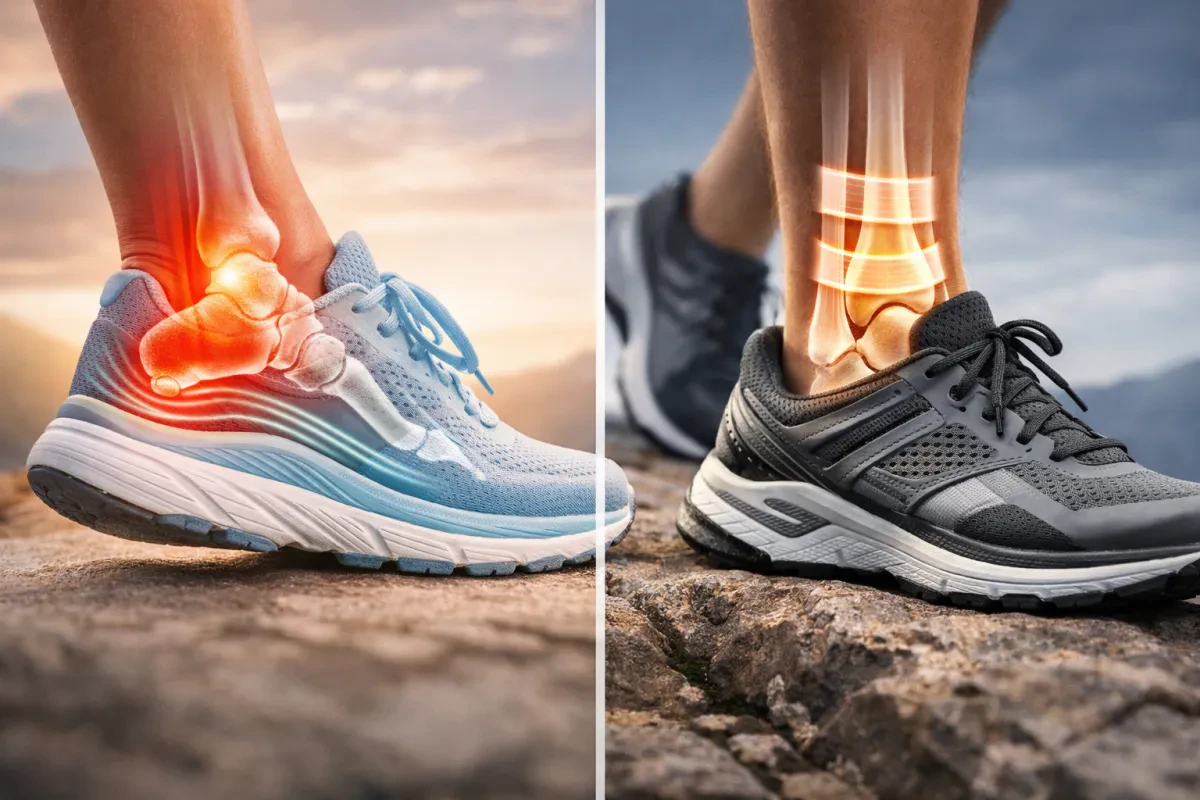
Foot pain often comes from two sources: repeated impact, and repeated strain from unstable movement. Cushioning reduces impact. Stability reduces unstable strain. Many people need both, but one is usually the priority based on how your symptoms show up.
When cushioning helps most
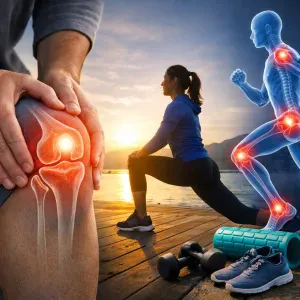
Cushioning helps most when your pain is triggered by impact. Think of impact as the “thud” you feel on hard floors. Cushioning can reduce the harshness of each step and help joints feel less stressed after long days.
Choose more cushioning if
- Heel pain flares on pavement or hard indoor floors
- Knees, hips, or back feel sore after walking
- You feel every step as a shock
- You stand on concrete for long periods
- You prefer a softer, smoother underfoot feel
What “good cushioning” feels like
It should feel protective, but not unstable. If you feel like you are sinking or swaying, the shoe may be too soft for your needs, or the base may be too narrow.
When stability helps most
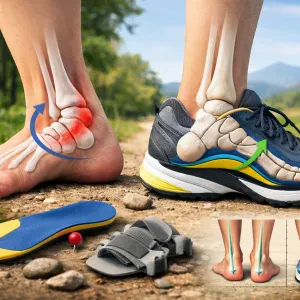
Stability helps most when your pain is triggered by strain from excess movement. This often shows up as arch fatigue, ankle wobble, or knee discomfort that feels linked to inward rolling. Stability shoes guide motion gently and provide a planted base so your muscles do not work overtime just to keep you steady.
Choose more stability if
- You overpronate or your ankles roll inward
- Your arches feel tired on long days
- You feel unsteady in very soft shoes
- Knee pain flares after walking or standing
- Your shoes wear down more on the inner edge
What “good stability” feels like
It should feel calm and predictable. If stability feels harsh or pokey under the arch, it may be too aggressive. Many people do best with moderate stability rather than maximum correction.
Signs you need more support
If these signs show up, stability or supportive structure is likely the missing piece. Support can come from a stability shoe, a wider base, better heel hold, or a more supportive insole setup.
Common signs
- Arch fatigue that builds during the day
- Ankles that feel like they “roll in”
- Knees feel stressed after walking
- Foot feels better when you hold the arch up with your hand
- More wear on the inner edge of the sole
- Soft shoes feel comfortable at first, then tiring
If your main issue is wobble and fatigue, adding more cushioning alone may not solve it. You usually need a steadier platform first.
Signs you need softer impact protection
If these signs show up, cushioning or shock absorption is likely the missing piece. The goal is not a marshmallow feel. The goal is reduced harshness on hard floors, with enough stability to keep steps predictable.
Common signs
- Heel pain feels worse on concrete and pavement
- Joints feel sore after walking on hard surfaces
- You feel like you are “slapping” the ground
- Feet feel battered after standing shifts
- You feel better in cushioned trainers than in flat shoes
If you need cushioning but feel unstable, choose cushioning with a wide base, supportive heel, and stable geometry.
Good matches by condition (PF, bunions, neuropathy, arthritis)
Most conditions respond to a mix of cushioning and stability, but one side often matters more. Use this as a starting point, then adjust based on how you feel in real use.
Plantar fasciitis and heel pain
- Often needs: stable cushioning, supportive heel, sometimes stability if overpronation is involved
- Avoid: flat, floppy shoes that increase heel impact and arch strain
Start here: Plantar fasciitis and heel pain relief picks
Bunions and wide fit feet
- Often needs: toe box space first, then stable base to reduce toe gripping
- Avoid: narrow toe shapes and stiff uppers that rub the big toe joint
Start here: Bunions and wide fit shoes
Neuropathy and sensitive feet
- Often needs: pressure relief cushioning plus stability, smooth interiors, and secure heel fit
- Avoid: rough seams, tight toe boxes, and wobbly soft platforms
Start here: Neuropathy shoes and sensitive feet comfort picks
Arthritis and joint pain
- Often needs: cushioning for impact plus smooth transitions, rocker support can help stiffness
- Avoid: harsh bending and very minimal soles on hard floors
Start here: Arthritis-friendly shoes and rocker support picks
Also useful: Walking shoes for joint pain
Brand examples and model types
Brands often offer both cushioning and stability lines. What matters is the category and the feel. Use brand pages as a shortcut to browse, then pick based on your support and cushioning needs. If you want to view a product on Amazon, click the Continue button next to the price.
Common cushioned types
- Max cushioning trainers for hard floors and long walks
- Cushioned walking shoes with smooth transitions
- Rocker plus cushioning styles for stiffness and joint comfort
Common stability types
- Everyday stability trainers for flat feet and overpronation
- Cushioned stability options for people who need both
- Support-heavy models for stronger inward roll
Brand shortcuts
FAQs
Can a shoe be both cushioned and stable?
Yes, and many of the best pain-relief shoes are exactly that. A stable base with cushioned impact protection is often the sweet spot for long days.
Why do soft shoes sometimes make my feet hurt more?
Very soft shoes can increase wobble and make your muscles work harder to stabilise. If your pain is driven by fatigue and instability, soft shoes can make symptoms worse.
Do stability shoes fix overpronation?
They reduce extremes rather than “fix” feet. The goal is calmer motion and less strain, not forcing a perfect position.
Should I use insoles instead of stability shoes?
Sometimes, especially if your shoe fit is good but you need more arch support. Many people do best with a stable shoe first, then insoles if needed for fine tuning.
What if I need cushioning but also have bunions?
Prioritise toe box shape and soft uppers first, then choose cushioning on a stable platform. A roomy toe box with a stable cushioned base is often a strong match.
Decision checklist
Use this quick checklist before you buy. The best choice is the shoe that reduces your main trigger and still feels stable and comfortable after 20 to 30 minutes.
Checklist
- My main trigger is: impact harshness or wobble and fatigue
- I have secure heel hold without slipping
- My toes have room and do not feel squeezed
- The shoe feels stable when turning and walking faster
- The underfoot feel reduces my discomfort rather than shifting it
- If I use inserts, the shoe has removable insoles and enough depth
- I can imagine wearing it for my real day: walking, standing, and stairs
Best next step: start with your main condition page, then choose stable cushioning or stronger stability based on how you feel. Compare two to four options, then pick the one that feels calm and secure. If you want to view a product on Amazon, click the Continue button next to the price.
Medical disclaimer: This content is for general information only and is not medical advice, diagnosis, or treatment. Shoes may improve comfort but they cannot treat the underlying cause of foot pain. If your pain is persistent, severe, or worsening, consult a qualified medical professional (such as a GP, podiatrist, or physiotherapist).