Note: Medical disclaimer at the bottom of this page, jump to disclaimer.
Why joint pain flares during long walks
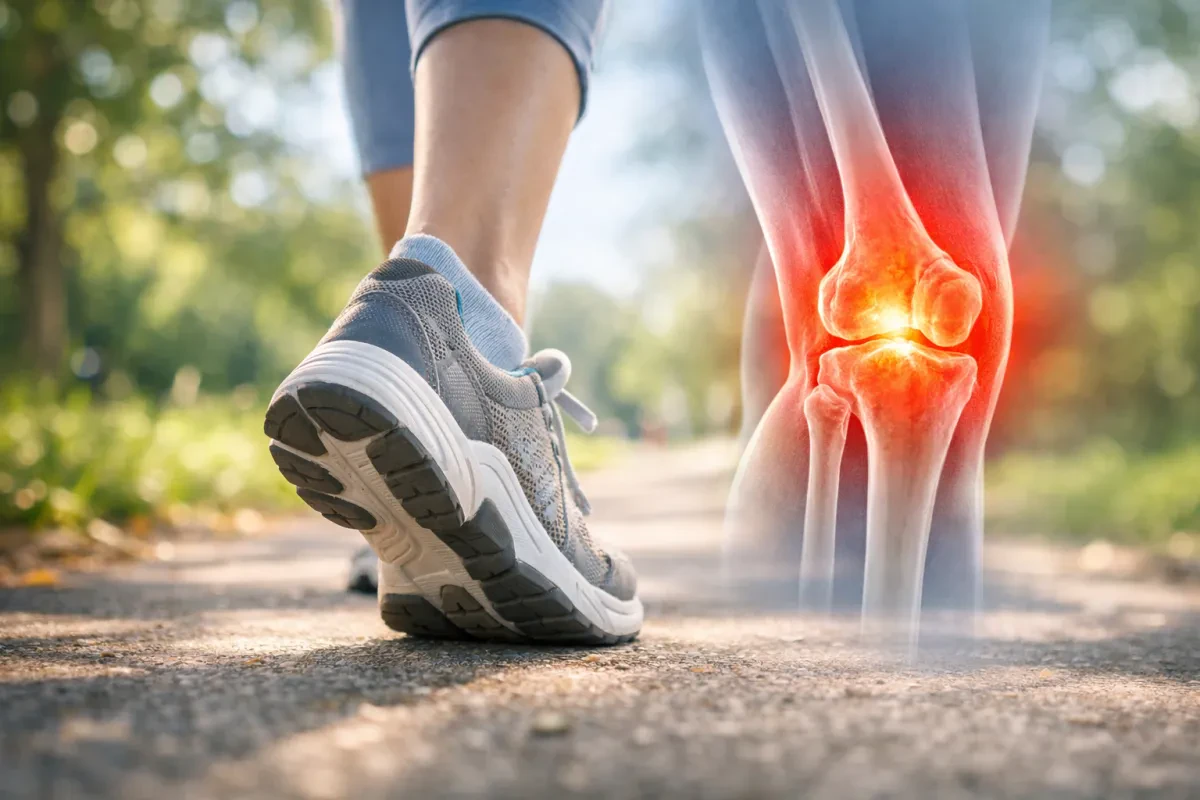
Walking is one of the best low-impact activities for many people, but it can still trigger joint pain when the total load adds up. Each step produces a small amount of impact and repeated motion. On a short walk, your body manages it. On a longer walk, small issues like harsh heel strike, unstable shoes, or tired muscles can turn into sore knees, aching hips, or cranky ankles.
Common reasons walking triggers joint pain
- Impact on hard surfaces: Pavement and packed paths increase the “thud” through the body.
- Fatigue changes your mechanics: As muscles tire, your stride can get heavier and less controlled.
- Unstable footwear: Soft but wobbly shoes can make ankles and knees work harder.
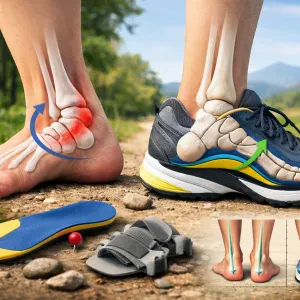
- Overpronation or poor support: If the foot collapses inward, joints up the chain may feel it.
- Stiff joints: If your toe joints or ankles do not move smoothly, your stride can feel jerky.
The right walking shoe aims to reduce impact, improve stability, and support a smoother heel-to-toe transition so your body does not absorb unnecessary stress with every step.
Cushioning vs stability for joint pain
For joint pain, you usually need both cushioning and stability. Cushioning reduces impact, stability reduces wobble and keeps your steps predictable. The balance depends on how your feet behave when you walk. If you land heavily and feel every step, cushioning is the bigger need. If you feel your ankles roll or you feel unsteady, stability becomes the priority.
When cushioning helps most
- Walking on pavements, concrete, and other hard surfaces
- Heel and forefoot impact sensitivity
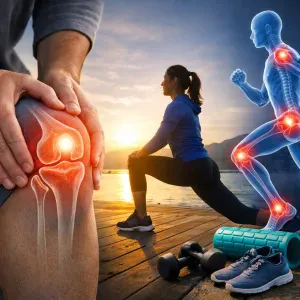
- Knee, hip, or back discomfort that flares after longer walks
- Long walking sessions where fatigue increases impact
When stability helps most
- If you overpronate or feel your ankles roll inward
- If very soft shoes make you feel wobbly
- If you feel arch fatigue or heel wobble late in a walk
- If you want a planted feel on uneven ground
A simple way to choose
If you try a shoe and it feels comfortable but you feel unsteady when you speed up or turn, you need more stability. If you feel stable but the ground feels harsh, you need more cushioning. Many people do best in a stable cushioned walking shoe that sits between the extremes.
Rocker vs flexible soles
Walking comfort is not only about softness. It is also about how the shoe moves through the step. Flexible soles bend more through the forefoot. Rocker soles roll forward with less bending. Both can work, but joint pain often responds well to smoother transitions.
Who tends to like rocker soles
- People with big toe joint or midfoot stiffness
- People who want a smoother “rolling” walk
- People whose joints flare when the foot bends a lot
- People walking longer distances at a steady pace
Who tends to like flexible soles
- People with good foot mobility who prefer a natural feel
- People walking on mixed terrain where flexibility helps grip
- People who prefer a lower stack height and more ground feel
Practical advice
If you have arthritis or toe stiffness, rocker can be a strong option. If you feel unstable in curved soles, choose a milder rocker or a stable walking shoe with a smooth transition rather than a very flexible shoe. The goal is smooth steps, not forced movement.
Outsole grip and smooth transitions
Grip matters because slips and small stumbles can spike joint pain fast. Outsole grip is also linked to confidence. When you feel secure underfoot, you tend to walk more naturally. When grip is poor, you may tighten up, shorten stride, and stress joints differently. That is why grip and transition features are part of comfort, not just safety.
What to look for in outsole grip
- Reliable tread: Enough pattern to grip paths and damp pavement.
- Stable contact: A wider base can improve confidence.
- Predictable feel: No sudden skidding on smooth indoor floors.
Smooth transitions reduce “jerk”
A shoe that transitions smoothly from heel to toe can reduce the feeling that your stride is slapping the ground. This can help knees and hips by reducing abrupt loading. Some shoes achieve this with geometry, some with mild rockers, and some with well-tuned stiffness. You do not need an aggressive rocker to benefit, a gentle smooth roll is often enough.
Best picks for men
These men’s pick categories focus on joint comfort: stable cushioning, smooth transitions, and supportive fit. Use them to guide readers to your listings and let them compare widths, sizing, and current pricing. If you want to view a product on Amazon, click the Continue button next to the price.
Men’s pick 1: Stable cushioned walking shoes for daily joint comfort
- Best for: most joint pain walkers, daily routes, mixed surfaces
- Brands to check: ASICS, Brooks, Mizuno
Men’s pick 2: Higher cushioning with a stable base for longer walks
- Best for: pavement walking, heavier impact sensitivity, longer distances
- Brands to check: HOKA, Brooks, ASICS
Men’s pick 3: Rocker support for smoother transitions and stiff joints
- Best for: toe stiffness, arthritis overlap, smoother stride feel
- Brands to check: HOKA rocker styles and rocker-based walking designs
Men’s pick 4: Stability support for overpronation and tired arches
- Best for: inward rolling, arch fatigue, longer walks on tired legs
- Brands to check: Brooks stability lines, ASICS stability lines, Mizuno stability lines
Men’s pick 5: Wide fit and depth options for comfort and inserts
- Best for: wide feet, orthotics, swelling changes, sensitive feet
- Brands to check: Orthofeet
Shortcut: Walking shoes for joint pain
Best picks for women
Women’s joint comfort often depends on secure heel hold and forefoot space, especially on longer walks where small fit issues grow. Prioritise heel security first, then choose cushioning and stability based on how your feet behave on tired legs. If you want to view a product on Amazon, click the Continue button next to the price.
Women’s pick 1: Supportive cushioned walking shoes for everyday routes
Women’s pick 2: Higher cushioning with stable support for longer walks
Women’s pick 3: Rocker support for smoother steps and stiffness
- Best for: toe stiffness, arthritis overlap, smoother stride
- Brands to check: HOKA rocker styles and rocker-based walking designs
Women’s pick 4: Stability support for overpronation and arch fatigue
- Best for: inward rolling, tired arches, longer walks
- Brands to check: Brooks stability lines, ASICS stability lines, Mizuno stability lines
Women’s pick 5: Wide fit and depth for comfort and inserts
- Best for: wider forefeet, swelling days, orthotics, sensitive feet
- Brands to check: Orthofeet
Shortcut: Walking shoes for joint pain
Fit, socks, and pacing tips
The right shoe makes a big difference, but your setup matters too. Fit, socks, and pacing can reduce irritation and help you walk more consistently, which often reduces joint flare ups.
Fit tips
- Toe space: Aim for a thumb width in front of the longest toe while standing.
- Heel hold: Secure heel fit reduces sliding and improves stability.
- Width: Do not size up for width. Choose a wide or roomier toe shape instead.
- Try later in the day: Feet swell slightly and fit becomes more realistic.
Sock tips
- Choose smooth seam socks to reduce friction.
- Light cushioning can improve comfort on longer walks.
- If swelling is common, avoid very tight sock bands.
Pacing tips that reduce flares
- Start shorter: Build distance gradually rather than jumping from short walks to long ones.
- Keep cadence steady: A smoother, consistent pace often reduces heavy heel strikes.
- Add rest days if needed: Joint pain often responds well to alternating easier days with longer days.
- Choose softer routes: Trails and tracks can feel easier than pavement.
FAQs
Are walking shoes better than running shoes for joint pain?
Not always. Many running shoes have great cushioning and stability and can work well for walking. The key is stability and smooth transition. Some running shoes feel too soft or unstable for walking long distances, so choose based on feel and fit rather than the label.
Do I need a rocker sole for joint pain?
Not necessarily, but rocker or smoother transitions often help if you have toe stiffness or arthritis overlap. If you feel better with a rolling step, rocker can be a strong option.
What if my knee pain is worse on downhill paths?
Downhill increases knee load. Choose shoes with stable cushioning and reliable grip so you feel confident. Consider shorter routes, slower pace on downhill, and gradually build tolerance.
How do I know if I need more stability?
If you feel your ankles roll inward, you feel arch fatigue, or you feel unsteady in plush shoes, stability is often helpful. A stable base can reduce joint workload by keeping steps more predictable.
How often should I replace walking shoes?
If comfort drops, cushioning feels flat, or joints start flaring in shoes that used to feel good, replacement may help. Many people notice the “dead” feel before the shoe looks worn out.
Related guides: arthritis, standing all day, overpronation
If joint pain overlaps with arthritis stiffness, long standing shifts, or overpronation, these guides can help you narrow down faster.
- Arthritis-friendly shoes and rocker support picks
- Work shoes for standing all day
- Flat feet and overpronation support picks
- Walking shoes for joint pain
Best next step: start with the joint pain walking listings page, then choose your main need: stable cushioning, more impact protection, rocker smoothness, or stability support for overpronation. Compare two to four options by fit and how your joints feel after a short test walk. If you want to view a product on Amazon, click the Continue button next to the price.
Medical disclaimer: This content is for general information only and is not medical advice, diagnosis, or treatment. Shoes may improve comfort but they cannot treat the underlying cause of foot pain. If your pain is persistent, severe, or worsening, consult a qualified medical professional (such as a GP, podiatrist, or physiotherapist).